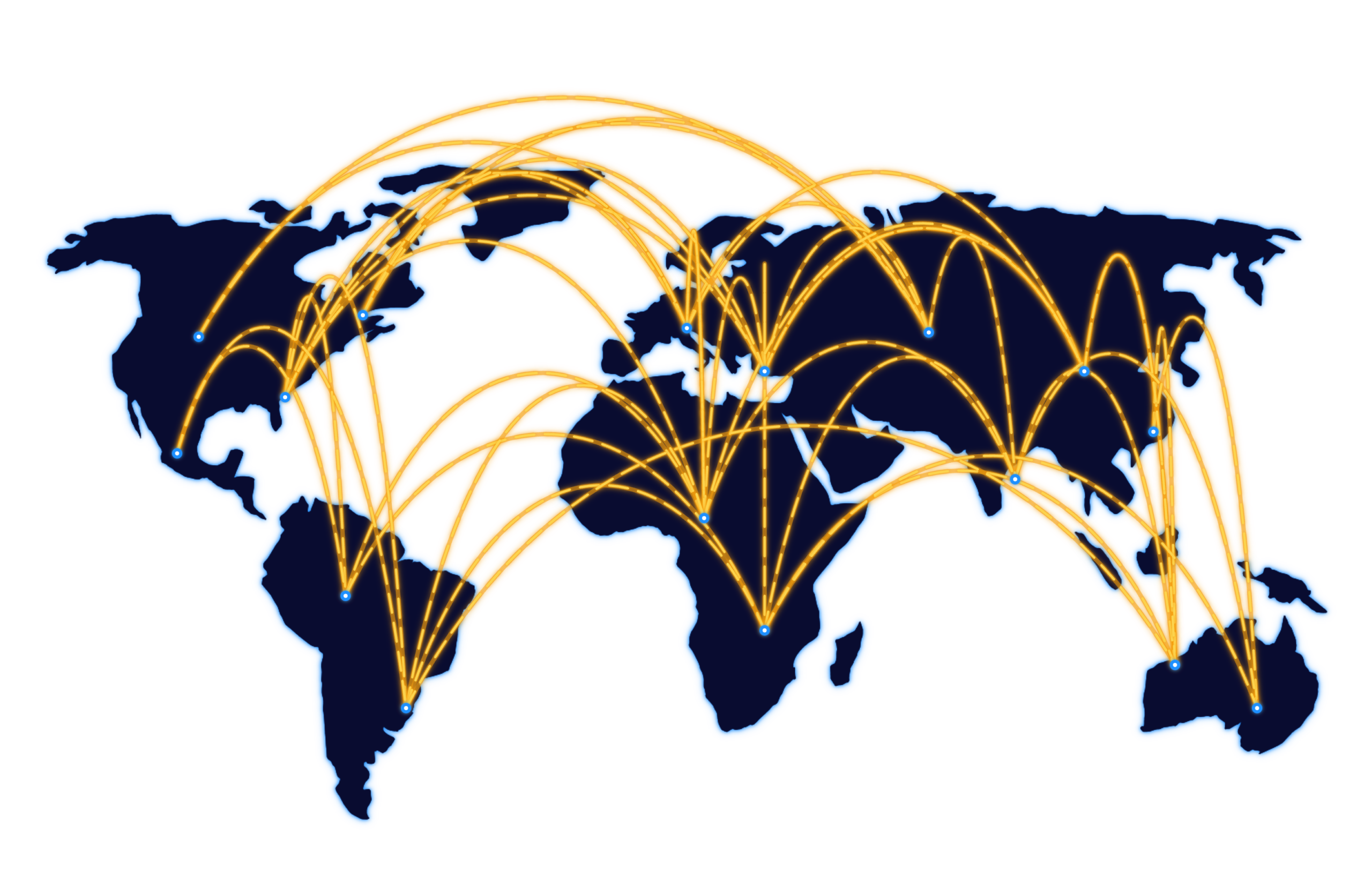
I often see that people would create a digital marketing strategy focusing on United States as a market, and then expand that to multiple countries and call it global digital marketing. Digital marketing for Global audiences works effectively only when you go local. A global audience is defined as the sum of a number of local audiences, distributed across continents and countries. Each local audience would have their own nuances. Irrespective of the industry, in the end you’re trying to have a conversation with a person. The expectations, behaviours and mental threshold varies person to person, but it is deeply influenced by the environment that they are brought up in and the environment they live in. That’s why micro segmentation works really well for Global digital marketing. The more micro you go the better results you get.
TL;DR
Global digital marketing only works when you go local. A global audience is just many local audiences, each with its own behaviours and expectations. Start with your main target market (North America for the most B2B companies), then expand based on data: track lead-to-close ratio and deal size per country and prioritise the positive outliers.
Markets differ sharply: Canada extends easily from US campaigns; the UK needs its own strategy despite shared language; France rewards French content but keeps ~20% English leads; Germany surprisingly performs better in English but demands trust signals like an Impressum; the Netherlands thrives on English; Japan requires native content and heavy research material.
Invest in international SEO for compounding returns. Remember hreflang tags, per-market keyword research, and non-Google engines (Baidu, Yandex, Naver) where relevant. Favour trans-creation over literal translation for conversion-focused content, and measure success by ROI per geography, not by comparing individual metrics across countries. The more local you go, the more global your results will be.
What Is International Digital Marketing?
If you are running a global B2B business, your digital marketing campaigns would surely focus on North America. 50% – 70% of your pipeline would also come from that continent. But if you want to grow across multiple countries and continents, you need international digital marketing.
If you are doing SEO, you would have a subdirectory for each language-country combination. If you are running Google Ads, you would have separate campaigns for each country keeping the volume threshold in mind, and so on.
How to Target the Right Markets
Unless your business is specific to a particular geography, you would mostly start with North America. Then you will try to see which countries can be targeted with the same English assets. You will add UK, Australia, and New Zealand. Then you will run the same assets targeting Europe and will get mixed results. This is extremely common and there is nothing wrong with it.
Alternatively, you can do some data crunching. Even with English assets you would get leads from a number of countries. Identify the lead-to-close ratio and average deal size for each country and see if some countries are outliers in a positive way. Target those countries first and go down the list for the rest.
Below I walk through several countries and share what has worked for me, and what has not.
What I Have Seen Market by Market
North America
If you have run digital marketing motion with some serious budget, I am sure you have targeted United States. I will not cover that country here.
Canada
If you take a US strategy and extend it into Canada, it will generally work, but at lower volume. In many cases I have simply added Canada to an existing US campaign and it performs. But if you want to go deeper, consider adding Quebec French content. It may not dramatically increase lead volume, but it makes your website feel genuinely Canadian. True localisation always helps.
Europe
United Kingdom
Even though the UK is English-speaking, I would recommend treating it as a separate strategy from the US. Lead volume will be a fraction of what you see in the United States. What I have observed, though, is that the lead-to-conversion ratio tends to be higher. There are language differences between UK and US English worth accounting for, and adding UK-based case studies makes a meaningful difference.
France
I have found the B2B audience in France to be similar to the US. They are open to conversation. Commercial activity is concentrated in 6 to 8 cities with a strong presence of large organisation headquarters. Most of your interest and leads will come from those cities.
French content outperforms English, but you cannot drop English entirely. Around 30% of leads still come through English-language content. When it comes to SEO, having properly structured French and English pages with hreflang tags do wonders. On the performance marketing side, Google Ads and Meta both work well, and LinkedIn too contributes to pipeline.
Germany
Germany is a neighbouring country to France, but they are very different markets. In my B2B campaigns in Germany, I ran both German and English campaigns, and I was surprised to find that the English campaigns outperformed the German campaigns in efficiency.
The German B2B decision-making audience requires strong trust signals. Having an Impressum page is critical for gaining trust and traction. One challenge I encountered is that they are not easy to reach by phone, so other modes of outreach tend to work better. The German audience wants to go deep on technical details. Additional technical detail on pages helps with conversion.
Netherlands
The Netherlands is the market where I have seen the strongest results coming through English-language content. Like France, a few cities host the large companies and headquarters, so focus your targeting there.
Sweden and Norway
Sweden has a large English-speaking audience and a well-established startup ecosystem, which makes it a strong market if your product is SMB-focused. Norway is another country where significant startup activity is happening today and worth keeping on your radar.
Asia
India
If you are targeting enterprises in India, you can have your website and campaigns in English. Your geo-targeting would be city-based, and the volume threshold would still not be a problem. If you are targeting SMBs, there is a high chance that you will have to create pages and campaigns in the local languages. The geo and audience targeting then needs to be aligned to the asset language.
Japan
One of the biggest practical challenges in Japan is that Japanese characters take 24 bits for storage while English characters take only 8 bits. Your web development team may need additional setup to host and deliver Japanese content correctly. Having Japanese content is non-negotiable if you want any traction in this market.
Decision-makers in large Japanese corporations typically speak English, but that may not hold for smaller organisations. Japanese buyers do a significant amount of research before getting on a first call, so providing more detail on pages, case studies, white papers, and technical documentation works very well. On the channel side, affiliates are worth keeping a close eye on in Japan.
Oceania
Australia and New Zealand
A global English strategy works in this region, but keep in mind that Australian English has its own vocabulary and usage. Local case studies help close that gap. Google Ads and SEO have worked well in Australia. Other ad channels are still a little inconsistent and worth testing before committing significant budget.
Getting Found Organically Across Borders
International SEO is one of the highest-leverage investments in a global digital marketing strategy. Unlike paid channels, organic rankings compound over time and can generate leads across multiple markets from a single well-structured website.
Hreflang Tags
Hreflang tags tell search engines which language and regional version of a page to serve to users in a given country. Without them, search engines may serve the wrong language version to international visitors, or flag duplicate content. For markets like France, implementing hreflang for English and French pages is a foundational step that consistently delivers results.
Local Keyword Research
Keyword research must be done per market. How a French buyer searches for a service is not necessarily a direct translation of how a US buyer searches. Tools like Google Keyword Planner filtered by country, or SEMrush with geo-filters, surface the actual terms your target audiences use in each market.
Search Engines Beyond Google
Google dominates most markets, but there are meaningful exceptions. In China, Baidu is the primary search engine and requires a separate optimisation approach. Russia uses Yandex. South Korea has Naver. Ignoring these differences limits your reach and return in those specific markets.
Trans-creation: Why Literal Translation Often Fails
When you expand to a new market, the instinct is to translate your existing content. You take your best-performing English pages, send them to a translator, and publish them. It looks localised. But it rarely performs the same way. Literal translation converts words. Trans-creation converts meaning.
A direct translation of an English headline keeps the words but loses the intent, the tone, and often the cultural relevance. What reads as confident and persuasive in English can come across as awkward or unconvincing in another language. Trans-creation sits between translation and rewriting. Translation stays close to the source text, word by word. Rewriting creates fresh content with a brief as the starting point. Trans-creation starts with the intent of the original — what emotion you want to evoke, what action you want to drive, what the brand is trying to say — and recreates that in a way that feels native to the target audience. The output may look very different from the source, but it carries the same purpose.
Measuring Success in International Digital Marketing
You should measure the traffic, lead, pipeline, customer and revenue numbers by geography to understand where you are seeing traction. You will see that the ratios would be different in different countries. That’s normal. I would suggest not comparing each ratio in isolation. Some countries may show low CPC, but the conversion rate may play a spoilsport. The comparison of countries should happen at the ROI level — investment vs. outcome.
Conclusion
Building a presence across multiple markets comes down to earning genuine relevance in each one. The businesses that do this well are consistent: they research the local audience, adapt their content and channels accordingly, and treat localisation as a real investment.
The more local you are willing to go, the more global your results will be.